Feline Verticality: 4 Scientific Reasons Why Cats Conquer High Ground

Cats are evolutionary masterpieces of agility and grace. To a feline, a home is not a flat floor plan, but a three-dimensional landscape of opportunities. From the top of a refrigerator to the narrowest bookshelf, no surface is exempt from their exploration. Understanding the biological and psychological drivers behind this vertical ambition allows owners to better cater to their pet's natural instincts while maintaining household order.
Key Takeaways: Understanding the Vertical Cat
- Instinctual Surveillance: Elevated perches allow cats to monitor their environment for both "prey" and potential threats.
- Safety & Security: Height provides a psychological sanctuary where ground-level stressors (dogs, children, vacuum cleaners) cannot reach.
- Physical Enrichment: Jumping and climbing serve as vital forms of isometric exercise and mental stimulation.
- Territorial Management: Vertical space expands a cat’s territory without increasing the square footage of the home.
Jumping and climbing are not merely "habits"; they are hardwired survival mechanisms. Whether your cat is a "tree dweller" or a "bush dweller," verticality plays a critical role in their daily well-being and confidence.
The Four Primary Drivers of Vertical Behavior
1. High-Impact Recreation and Fun
For many cats, the act of ascending is a self-rewarding game. The physical exertion required to propel themselves onto a high shelf provides a "dopamine hit" of accomplishment. Owners often observe "the zoomies," where a cat runs and scales various surfaces in quick succession—this is a vital expression of energy and predatory practice.
2. The "Safety Altitude" for Security
In the wild, a cat in an elevated position is less vulnerable to ambush. In a domestic setting, this translates to resting in places where they can survey the room without being disturbed. A high perch allows a cat to enter a deeper state of sleep because they feel protected by the physical distance from the ground.
3. Ancestral Hunting Instincts
Cats are both predators and prey. Perching in high areas is an instinctual tactic that allows them to observe the movements of "prey" (like a laser pointer, a toy, or even your moving feet) while remaining hidden. Reclaiming the high ground is also a way for a cat to establish social hierarchy in a multi-pet household.
4. Curiosity and Environmental Investigation
A cat’s curiosity is often driven by the desire for information. High surfaces frequently host novel objects, unique scents, or views of the outdoors (birds and insects). If a cat jumps on a counter, they are often performing a "reconnaissance mission" to see what has changed in their territory.
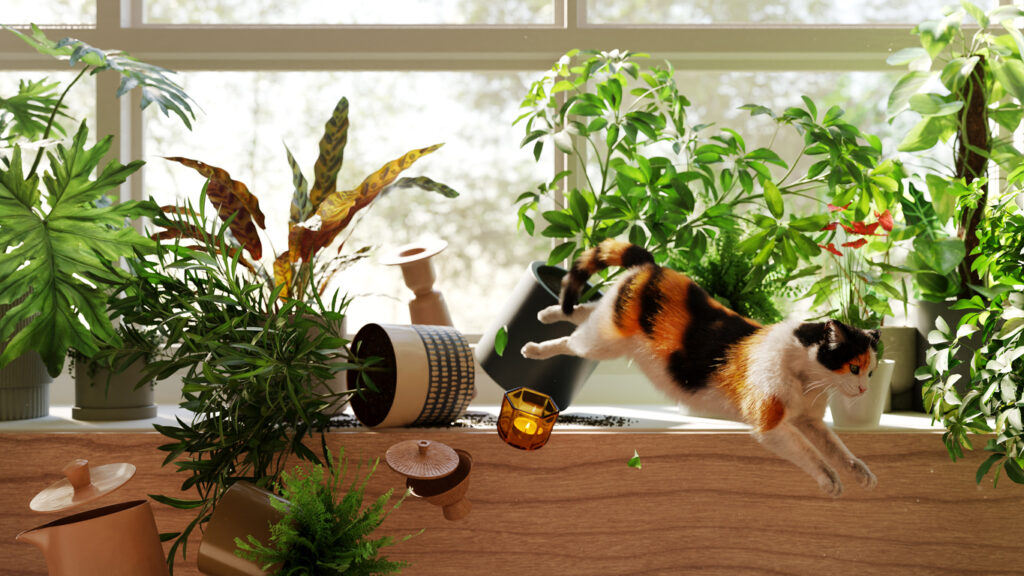
Managing Inappropriate Jumping Behavior
While the instinct is natural, certain areas—like kitchen counters or stovetops—pose safety and hygiene risks. You can redirect this behavior without suppressing their natural needs.
- Substitution: Provide dedicated cat trees or wall-mounted shelves. A cat will usually choose a purpose-built climbing structure over a counter if it offers a better view.
- Deterrence: Use double-sided tape on surfaces you wish to protect. Cats find the sticky sensation on their paws unpleasant but harmless, leading them to avoid the area.
- Resource Management: Ensure food is stored in airtight containers. If the counter consistently yields "rewards" (scraps of meat or crumbs), the cat will continue to scavenge there.
Frequently Asked Questions (FAQ)
Q: Should I be worried if my older cat stops jumping on things?
A: Yes. A sudden decrease in mobility or jumping frequency in senior cats is often a sign of arthritis or joint pain. If your once-active climber is staying on the floor, consult a veterinarian to assess their musculoskeletal health.
Q: Is it safe to use "scat mats" or loud noises to stop jumping?
A: It is generally better to use "passive" deterrents like double-sided tape. Fear-based deterrents (like loud canisters) can increase a cat's anxiety and damage your bond with them. Focus on providing "yes" spaces (cat trees) rather than just saying "no."
Q: Why does my cat jump on the refrigerator specifically?
By respecting the vertical nature of your feline companion, you can create a home environment that satisfies their predatory soul while keeping your kitchen counters hair-free. High perches are not a luxury for cats; they are a biological necessity for a happy, stress-free life.
Posting Komentar untuk "Feline Verticality: 4 Scientific Reasons Why Cats Conquer High Ground"