Cat Collar Guide: How to Properly Fit and Adjust Your Feline's Safety Breakaway Collar

Outfitting your cat with the right collar is a crucial step in ensuring their safety, whether they are an indoor or outdoor cat. A properly fitted collar with identification significantly increases the chances of your pet being returned quickly if they get lost. However, the process of introducing and securing a collar doesn't have to be stressful. Before diving into the steps, you must understand the safety features and fitting requirements. Below is a guide on selecting the right collar, followed by four easy steps to put it on and ensure a perfect fit.
Preliminaries: Choosing the Right Collar
Why Do Cats Need Collars?
The primary reason cats need collars is safety and identification. Collars are the simplest way to attach an ID tag containing your cat’s name and your contact information. This is essential for both indoor cats (who may escape unexpectedly) and outdoor cats. Additionally, vaccination tags can be attached, which is important if your outdoor cat gets into a scuffle. If dangling tags bother your cat, opt for personalized collars where the information is engraved or printed directly onto the material.
What Should You Look For in a Collar?
While most cat collars come in one standard size (kittens require smaller, specific options), the most vital feature to look for is a breakaway closure (or quick-release buckle). This safety mechanism ensures the collar snaps open when enough pressure is applied, preventing your cat from becoming injured, immobilized, or strangled if the collar gets caught on a branch, fence, or household object. You should avoid elastic designs entirely, as these pose a major risk of entanglement if the cat manages to slip a paw through.
How to Put On a Cat Collar in 4 Steps
1. Let Your Cat Investigate the Collar
Start by making the collar a familiar object. Wait until your cat is relaxed or sitting comfortably. Take the new collar out of its packaging and place it nearby, allowing your cat to investigate its smell and texture with their paws, nose, or mouth. To help speed up the process, you can:
- Leave the collar in one of your cat’s favorite spots for a few days so it absorbs their scent.
- Rub the collar with a small amount of catnip to create a positive association with the object.
2. Put the Collar on Your Cat
Choose the optimal time—many owners find success while the cat is relaxed or distracted by dinner. Loop the collar around your cat’s neck and secure the fastener.
- Ensure it’s a breakaway closure: The pieces should snap together easily with a reassuring "click."
- Readjust if necessary: If your cat immediately attempts to remove the collar using their paws and is successful, adjust the length and try again. Most cats become accustomed to wearing collars fairly quickly.
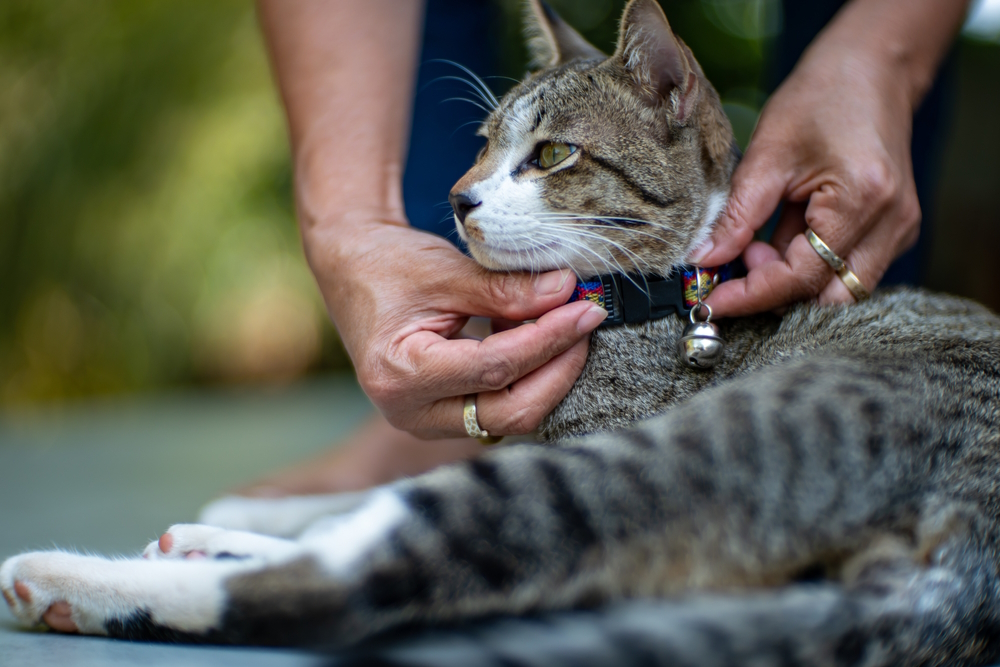
3. Ensure the Collar Isn’t Too Tight or Too Loose
The fit is critical for comfort and safety. Use the “two-finger rule” to check the sizing: gently slip one or two fingers under the fastened collar while your cat is wearing it. Your fingers should pass easily, indicating enough room without being too loose.
- If adjustment is needed, remove the collar completely before using the sliders to change the length. Adjust in small increments (e.g., ½-inch) to perfect the fit.
- A collar that is too loose can snag easily, and one that is too snug can cause skin irritation, discomfort, and fur loss.
4. Check the Fit Periodically
Make collar fit checks a regular habit, perhaps incorporating it into your cat’s regular grooming routine. Regular checks are essential because:
- Kittens grow rapidly and require weekly adjustments.
- Adult cats may gain or lose weight, altering the fit of their collar.
Final Thoughts
Introducing a collar to your cat involves finding the right product—always prioritizing the breakaway fastener and reflective strips for visibility—and ensuring the fit is correct using the two-finger rule. By allowing your cat time to habituate to the collar and checking the sizing regularly, you provide an essential layer of safety for your beloved feline.
Frequently Asked Questions (FAQ)
What is the “two-finger rule” for fitting a cat collar?
The “two-finger rule” is the standard method for checking a collar’s tightness. Once the collar is fastened, you should be able to comfortably slip two fingers between the collar and your cat’s neck. This ensures the collar is snug enough not to slip off but loose enough to prevent choking or discomfort.
Why should I avoid elastic collars for cats?
Elastic collars are dangerous because cats can easily hook a paw, leg, or jaw through the stretched material. If this happens, they can become immobilized or seriously injure themselves while trying to escape. Breakaway collars are the only recommended safe alternative.
Do indoor cats really need to wear a collar?
Yes, indoor cats should wear collars with identification. While they live inside, there is always a risk of accidental escape. A collar with your contact details is the fastest way for someone to return your cat, especially since many people who find a lost cat may not immediately check for a microchip.
Posting Komentar untuk "Cat Collar Guide: How to Properly Fit and Adjust Your Feline's Safety Breakaway Collar"